
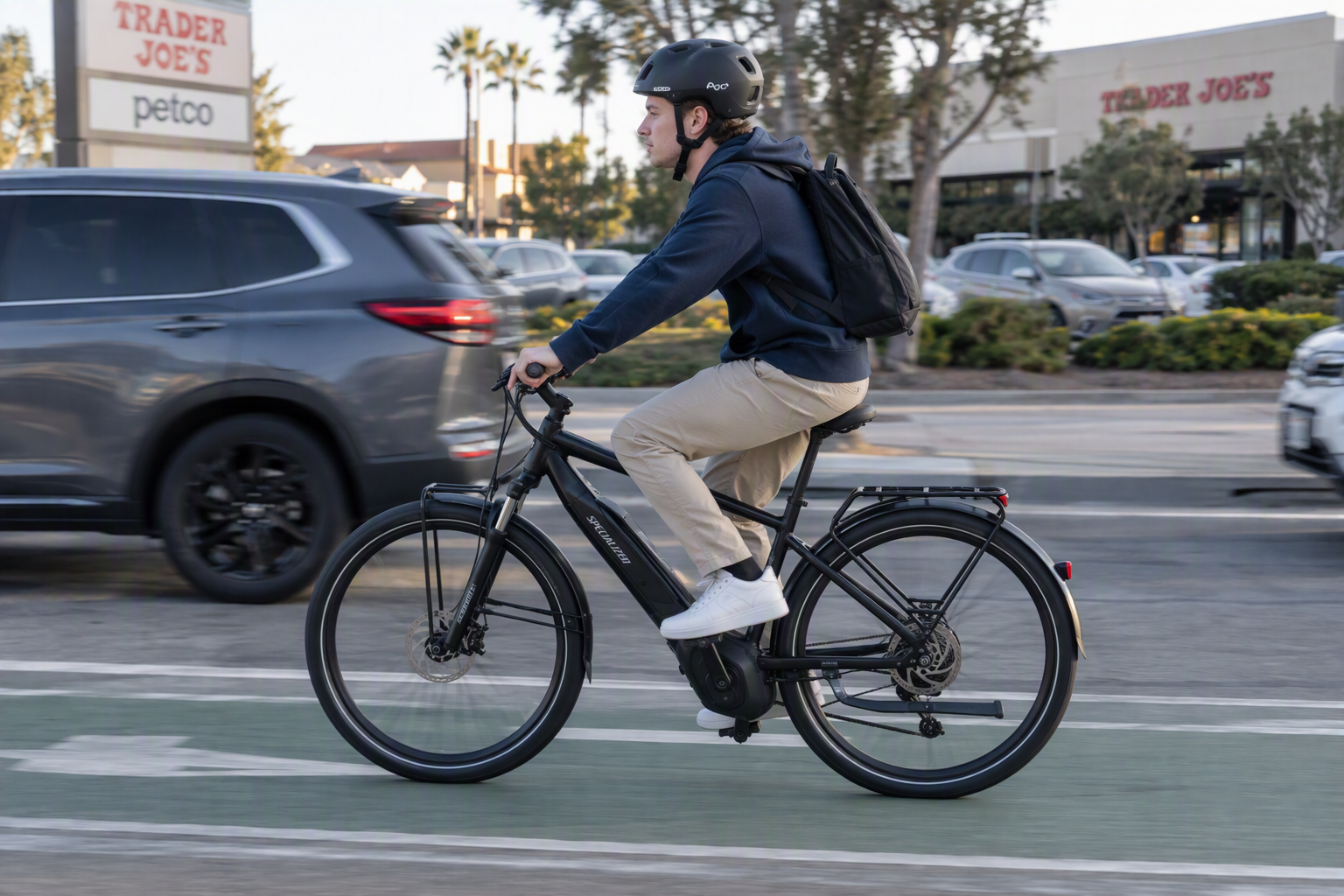
Electric bikes are increasingly popular across California—for commuting, recreation, and everyday transportation. As insurance agents, we frequently receive questions about how e‑bikes are treated under California law and whether standard insurance policies provide adequate protection.
Below, we answer the most common questions we hear from California riders.
Q: How does California define an electric bike—and when does it become a motorcycle?
California law defines electric bikes under a three‑class system:
- Class 1: Pedal‑assist only; motor assists up to 20 mph
- Class 2: Throttle‑assisted; motor assists up to 20 mph
- Class 3: Pedal‑assist only; motor assists up to 28 mph (helmet required; additional age and access restrictions apply)
To qualify as an electric bike in California, the vehicle must also have a motor of 750 watts (1 horsepower) or less and include operable pedals.
Where confusion often occurs
Many vehicles marketed or referred to as “e‑bikes” are not legally electric bikes under California law.
If a two‑wheeled vehicle:
- Exceeds 750 watts
- Can travel faster than 28 mph
- Operates without pedaling
- Or resembles a moped or small motorcycle in design or performance
…it may be legally classified as a motorized bicycle, motor‑driven cycle, or motorcycle—even if the owner considers it an e‑bike.
Why this matters for insurance
This distinction is critically important from an insurance standpoint. Vehicles that fall outside California’s electric bike definition are often treated as motor vehicles, which means:
- They are not covered under homeowners or renters insurance
- Personal liability coverage is often excluded
- They may require registration, a motorcycle endorsement, and a separate motorcycle insurance policy
One of the most common coverage gaps we see is someone assuming they are insured because they “own an e‑bike,” when the vehicle is legally and contractually something very different.
Q: Are electric bikes legal to ride in California without registration or a license?
Yes—Class 1, Class 2, and Class 3 electric bikes do not require a driver’s license, registration, or insurance under California law.
However, if the bike exceeds the legal definition of an e‑bike and is classified as a motorcycle or similar vehicle, different legal and insurance requirements may apply.
Q: Are electric bikes covered under California homeowners or renters insurance?
Sometimes—but with limitations.
Many California homeowners and renters policies provide limited coverage for bicycles as personal property, but coverage depends on:
- The e‑bike’s value, motor size, and speed
- Policy definitions and exclusions
- Whether the bike qualifies as an electric bicycle under the policy
Even when coverage exists, limits may be lower than the cost of replacing a high‑value e‑bike.
Q: Is liability coverage included if I injure someone while riding my e‑bike?
Liability coverage may apply, but only if the e‑bike qualifies under your policy’s definition of a bicycle.
If the vehicle is considered motorized under the policy—even unintentionally—personal liability coverage may not apply, leaving the rider personally responsible for injuries or property damage.
This is especially relevant in California, where e‑bike use in traffic and shared spaces is common.
Q: What if I use my electric bike to commute to work?
Commuting does not automatically exclude coverage, but frequent road use increases exposure. In higher‑traffic areas throughout California, claims involving e‑bikes and vehicles are becoming more common.
Regular commuters may want to evaluate:
- Liability limits
- Medical payments coverage
- Theft and damage protection
Q: Is my electric bike covered if it’s stolen in California?
Possibly, but often not fully.
California experiences higher‑than‑average bicycle theft rates in many cities. While homeowners or renters insurance may cover theft, limits and deductibles often mean significant out‑of‑pocket costs, especially for higher‑end e‑bikes.
Q: Are crashes or accidental damage covered?
Typically, no.
Standard homeowners and renters policies usually do not cover collision or accidental damage involving bikes. Standalone e‑bike insurance or endorsements may provide broader protection for:
- Crashes
- Vandalism
- Fire
- Accidental damage
Q: Does California require electric bike insurance?
No—California does not require insurance for legally defined electric bikes. However, optional coverage is often recommended, particularly for riders with expensive bikes or frequent road exposure.
Q: How much does electric bike insurance cost in California?
Costs vary based on:
- The value and class of the bike
- How often and where it’s ridden
- Coverage limits and deductibles
In many cases, coverage is relatively affordable compared to replacing a stolen or damaged e‑bike out of pocket.
Q: What’s the best way to make sure I’m properly covered in California?
A review with a California‑licensed insurance agent is the best place to start. We can:
- Confirm how your policy treats your e‑bike
- Identify potential coverage gaps
- Recommend endorsements or alternative coverage options if needed
Because insurance definitions don’t always align with California vehicle law, a brief review can help avoid costly surprises.
Electric bikes offer an efficient and enjoyable way to get around California, but insurance considerations are often misunderstood—especially when bikes fall into legal gray areas between bicycles and motorcycles.
Understanding how your e‑bike is classified, both legally and under your insurance policy, is an important step in protecting yourself financially.
If you have other policies with LBW and want to discuss coverage for your electric bike, please reach out to us at info@lbwinsurance.com or (888) 522-7805.